by Michelle Lau
When we talk about managing Parkinson’s, medication usually comes to mind first. However, new Parkinson’s research has shown that there’s another tool that can make a huge difference: physical exercise. It turns out that almost all forms of exercise effectively improve both motor and non-motor symptoms.
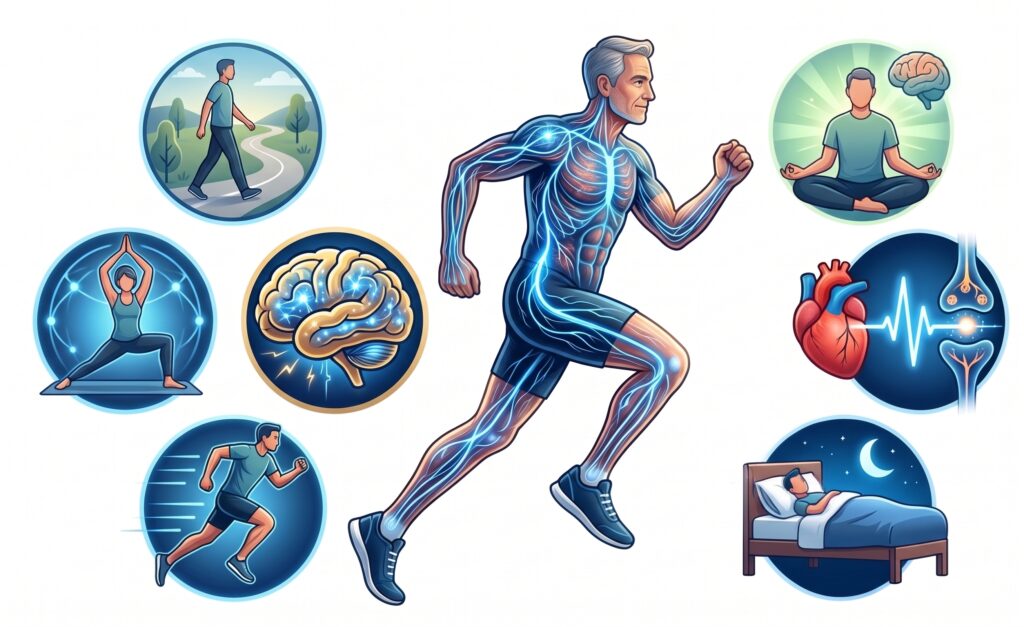
Motor improvements include:
movement speed, walking control, balance, cardiovascular health, and neuron health.
Exercise has also been shown to help with non-motor symptoms and can help overcome fatigue, improve mental health, and enhance sleep quality.
Biological Mechanisms: What Happens in the Brain
So what happens in the brain to make these improvements happen? The answer lies in a miraculous tool the brain uses called neuroplasticity. Neuroplasticity is the brain’s ability to adapt and form new connections in response to the body’s environment. This means that exercise actively changes brain chemistry to protect neurons. Special proteins called neurotrophins help improve neuronal health, slow degeneration, and restore mobility.
Specific Exercises and their Benefits
So what next? How do we start including exercise in our daily lives? Well, thankfully, there are many simple, easily accessible exercise options. Depending on what fits best into your routine, these generally fall into three main categories:
1. Structured Clinical Trials and Studies:
If you are looking for guidance right after a diagnosis, participating in a clinical trial or structured study can be a great way to get started. Not only can this help keep you active, but it can also help researchers better understand the connection between exercise and Parkinson’s.
How to find and enroll in Parkinson’s clinical studies:
- ClinicalTrials.gov: The world’s largest registry of clinical studies. You can filter searches by location, condition (“Parkinson’s Disease”), and status (e.g., “Recruiting”).
- Fox Trial Finder: Hosted by The Michael J. Fox Foundation, this tool matches patients with Parkinson’s to trials seeking participants in their local area.
- Parkinson’s Foundation Study Finder: Lists ongoing national and international studies, including virtual and home-based trials
2. At-Home Exercises:
You don’t need specialized equipment to get the benefits of movement. These options can be done on your own time and are likely found around your neighborhood.
- Aerobic Exercises (Walking, Jogging, Treadmill, Swimming, Cycling): Studies on walking speed show that simple cardio is the most effective way to improve gait stability and walking speed. This is essential for preventing future declines in mobility, falls, and injuries.
- Mind and Body Exercises (Yoga, Tai Chi, QiGong, Dancing): Research highlights that these lower-impact, enjoyable activities are highly effective for overall mobility. Researchers report that patients can easily build a long-term habit with these activities!
3. Specialized Parkinson’s Exercise Programs/Events
Beyond individual workouts, there are community programs tailored specifically for individuals with Parkinson’s. These offer structured lessons designed to target specific symptoms, such as balance and cadence. They are also a great way to find a supportive community environment!
Some of these programs include:
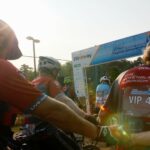
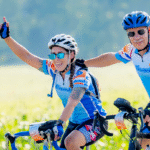
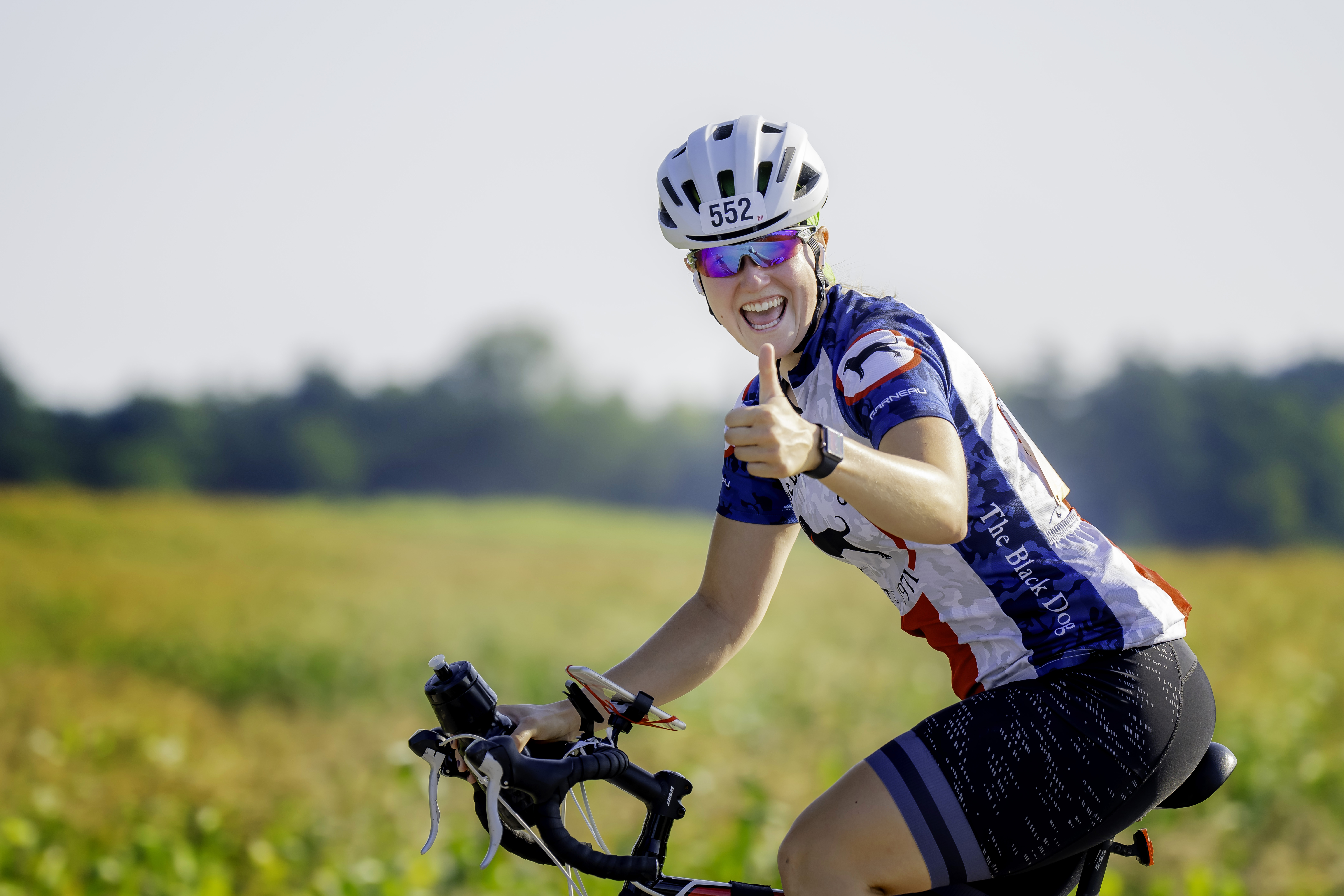
- New England Parkinson’s Ride: An annual cycling fundraiser and community event based in Maine that partners with The Michael J. Fox Foundation. It offers routes ranging from 10 to 100 miles, encouraging participants of all fitness levels to use cycling to stay active and advance research.
- Sign up at this link: https://give.michaeljfox.org/event/2026-new-england-parkinsons-ride
- Rock Steady Boxing: A popular non-contact boxing program with hundreds of affiliate locations worldwide.
- Pedaling for Parkinson’s: Stationary cycling classes offered at local YMCAs and community fitness centers globally.
- Dance for PD: Specialized dance classes in over 25 countries (and online).
- Moving Day (Parkinson’s Foundation): A community walk and movement event held in cities across the US to raise awareness for PD and promote active living.
- PingPongParkinson: A non-profit organization with over 400 chapters worldwide that promotes table tennis as a therapeutic activity.
Bicycling & High-Cadence Cycling
So why do we focus on cycling? The special thing about biking is that it’s a highly accessible form of exercise for people with PD. Even though some may experience freezing or walking difficulties, many can still ride a bike smoothly.
It is also scientifically proven to be very effective in relieving PD symptoms. A study concluded that high-cadence tandem cycling produced a 35% reduction in overall motor symptoms. Patients also had a 16.5% improvement in walking speed on the Timed Up and Go (TUG) test.
Conclusion
In conclusion, exercise is a scientifically backed tool that can directly impact both brain function and daily mobility for people with Parkinson’s. From high-cadence cycling and walking to mind-body practices like Tai Chi or Ping Pong, there are a variety of exercises to choose from.
Whether you stay active through home workouts, local community programs, or clinical trials, taking action early can make a huge difference in improving quality of life. The most important part is choosing an activity you enjoy and will stick to.
As Parkinson’s research continues to develop, we learn more about the potential of exercise and its incredible impacts on brain health, well-being, and independence. Every walk, dance, and pedal we take contributes to better brain health, strengthening our fight against Parkinson’s.
Effects of exercise/forced exercise in general:
https://journals.plos.org/plosone/article?id=10.1371/journal.pone.0293826
- This study is an umbrella review analyzing 139 study reviews
- Measured mobility, mainly balance, in PD patients after exercise
- Also measured improvements in non-motor symptoms
- Physical exercise can improve both motor and non-motor symptoms
- Exercise can help with motor symptoms including:
- Hypokinesia (Less movement), bradykinesia(Slowness of movement), gait disturbances (Change in way of walking), neuronal degeneration (loss of neurons)
- Can help with cardiovascular health
- Can also help with non-motor symptoms:
- Fatigue and mental health
- Almost all exercises were proven to be effective
https://pmc.ncbi.nlm.nih.gov/articles/PMC11742409/
- A study on how specific types of exercise can help with walking speed
- They used statistics to analyze their data/the significance of their data
- Found that aerobic exercise is the most effective for walking speed
- Things like walking, jogging, cycling, or swimming
- Mind-body exercises are also effective for greater mobility
- Things like Tai Chi, QiGong, and yoga
- This is important because a slow walking speed can be a hallmark of future mobility issues
- More stable walking through exercise can help prevent falls and injuries
https://pmc.ncbi.nlm.nih.gov/articles/PMC6238554/
- Potentially, exercise can cause more gene regulation of growth factors and neurotrophins, improving mobility
- Exercise → upregulation of neurotrophins → improve neuron health → slow neuron degradation → get mobility back
- Happens through neuroplasticity: when the brain can adapt and rewire itself to slow the progression of the disease
- Exercises include:
- Aerobic exercises like treadmill, walking, jogging, biking
- Other fun activities like dancing, traditional Chinese exercise, yoga
- Find enjoyable exercises and stick to them to help improve symptoms
https://pmc.ncbi.nlm.nih.gov/articles/PMC10649382/
- A study of 40 people to see if exercise is effective in managing symptoms
- They did a 12-week training camp with routines
Effects of bicycling specifically: Gemini says that it is popular because PD patients can ride bikes even when they have gait disturbances
. https://pmc.ncbi.nlm.nih.gov/articles/PMC4557094/
- “High-cadence tandem cycling resulted in a 35% reduction in PD motor symptoms”
- 16.5% improvement in walking speed according to a TUG (Timed Up and Go) test that they conducted
https://pmc.ncbi.nlm.nih.gov/articles/PMC8463550/
- Even though some PD patients had freezing and gait issues, they were still able to bicycle